
Restore Critical Services Faster

Minimize downtime and protect customer experience with rapid service restoration.

When services fail, every second counts. Empower your teams with proven service recovery runbooks that coordinate multi-supplier responses and restore operations quickly while maintaining full audit trails.

Runbook
Trusted by global banks since 2012
Trusted logo
solution-shape-logo-exact
The problem

Service Failures Cost More Than Ever

Slow recovery damages customer trust, revenue, and regulatory standing

Breached SLAs

Recovery times exceed contractual commitments resulting in financial penalties, customer churn, and reputational damage that takes years to repair.

Supplier Coordination Failure

Critical services depend on multiple vendors, but recovery efforts are fragmented across emails, calls, and outdated contact lists during incidents.

Reactive Recovery

Service recovery procedures are improvised during crises rather than tested in advance, leading to mistakes, delays, and uncontrolled escalation.

The solution

The RBM Solution

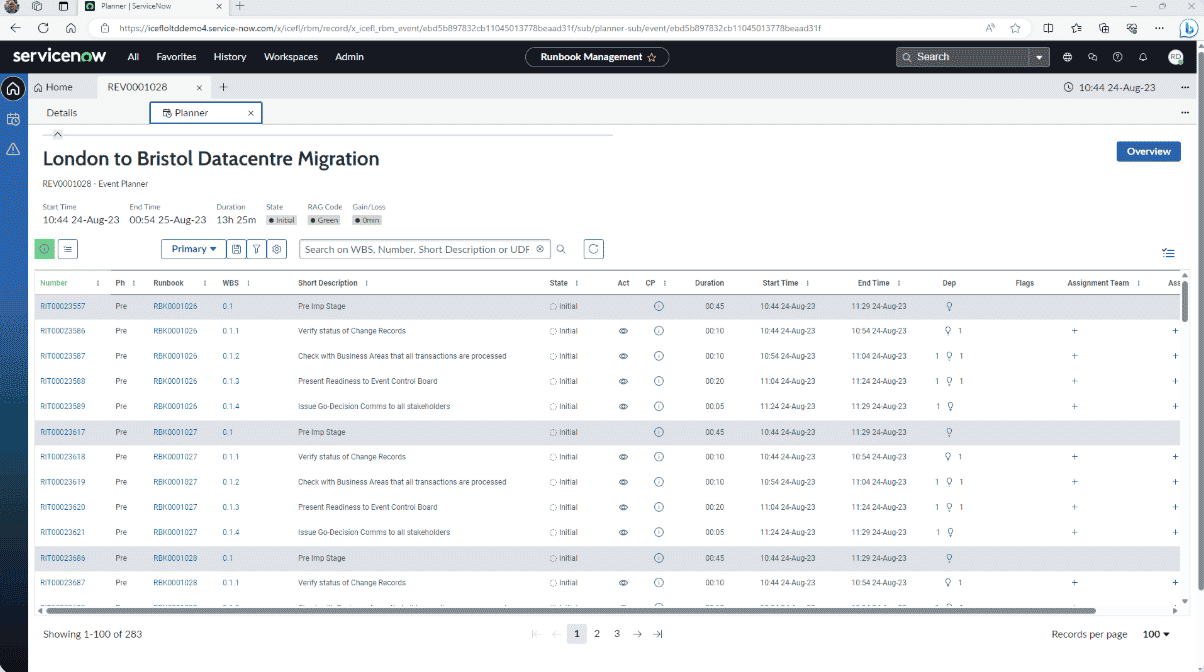
Runbook Management (RBM) is the only ServiceNow-native solution that replaces manual recovery spreadsheets - providing real-time coordination, visibility, and communication during live incidents to ensure faster recovery and minimal disruption, all at a fraction of the cost of legacy tools.

Quick onboarding

Concern
No time for lengthy procurement, security reviews, and architecture approvals.
Reality
Native ServiceNow app. Already approved in your environment. Deploy from ServiceNow Store in minutes, not months. Security and architecture already vetted.

Instant Adoption

Concern
Team doesn't have time to learn another complex tool.
Reality
Familiar ServiceNow interface. If they use ITSM, they already know 80% of RBM. Start small with one event, expand naturally as confidence builds.

Affordable Pricing

Concern
No budget for expensive enterprise software.
Reality
Subscription model starting under £10k annually. Free 30-day trial. Pay only for what you need. ROI from avoiding one outage pays for years of use.

Meet Regulatory
Requirements with Confidence

Identify important business services, define severe but plausible scenarios, and demonstrate preparedness through rigorous stress testing.

Business Services

Important Business Services

Leverage the ServiceNow Common Service Data Model (CSDM) to systematically identify and classify important business services. Map dependencies across systems, processes, and third parties.

  • check-icon Identify & Classify
Plausible Scenarios

Plausible Scenarios

Define severe but plausible scenarios that could disrupt operations and threaten regulatory compliance. Build detailed recovery plans that specify actions, responsibilities, and timelines for each scenario.

  • check-icon Plan for Success
DR Stress Tests

Scenario Testing

Conduct rigorous stress tests to validate recovery procedures. Demonstrate preparedness to regulators, identify gaps, and establish evidence-based recovery time objectives that meet compliance standards.

  • check-icon Build Confidence
Service Recovery

Service Recovery

Execute validated recovery procedures during incidents. Mobilize response teams immediately, coordinate multi-party restoration efforts, and maintain audit trails that demonstrate regulatory compliance.

  • check-icon Rapid Response

Why Disaster Recovery Matters

check-icon

Customer Experience Impact

Service disruptions directly impact customer satisfaction and loyalty. Fast, coordinated recovery processes can transform negative experiences into demonstrations of reliability and commitment.

check-icon

SLA Compliance

Meeting Service Level Agreements requires rapid response and efficient recovery processes. Structured runbooks ensure teams can restore services within committed timeframes, avoiding penalties and maintaining contractual obligations.

check-icon

Revenue Protection

Every minute of downtime translates to lost revenue and productivity. Effective service recovery minimises financial impact by reducing mean time to recovery (MTTR) through well-rehearsed procedures.

check-icon

Multi-Supplier Coordination

Modern IT environments involve multiple cloud providers and service suppliers. Structured recovery runbooks coordinate across vendors and internal teams, ensuring seamless restoration in complex hybrid environments.

Who is this for?

Service Recovery scenarios benefit key roles responsible for maintaining service availability and rapid response to disruptions.

head

Head of Operational Resilience

Build organisational capability to rapidly restore critical services. Demonstrate service recovery readiness to regulators and maintain customer confidence during disruptions.

Technology Officer

Chief Technology Officer

Maintain service availability while managing high volumes of change. Ensure reliable, well-rehearsed business continuity and service recovery plans.

Delivery Manager

Service Delivery Manager

Facilitate change, manage risks, and maintain service availability. Plan, prepare, and recover business services with confidence and predictability.

Content Author

Content Author

Apply your business or technology expertise to define detailed tasks, dependencies, and estimates. Create comprehensive plans on a powerful canvas.

Task Owner

Task Owner

Define and execute tasks with precision. Contribute technical expertise to build accurate plans and perform tasks with visibility, control, and predictability.

How it Works

A modern approach to operational resilience in three simple steps

01

Plan

Build structured, digital runbooks with tasks, owners, and dependencies. Integrate business services, change, incident and risk.

02

Rehearse

Run high quality simulations and rehearsals, capturing real-world durations and planning gaps. Build confidence and validate readiness.

03

Execute

Orchestrate go-lives and recoveries with real-time visibility, full control and automated audit. Experience the difference.

Frequently Asked Questions

How does RBM reduce mean time to recovery (MTTR)?

RBM provides immediate access to tested recovery procedures, eliminates time wasted searching for information, automates notification of response teams, and coordinates multi-supplier actions. Teams execute recovery faster because they know exactly what to do.

Can RBM help coordinate third-party suppliers during recovery?

Yes, RBM integrates all recovery stakeholders, including internal teams, managed service providers, and vendors. Everyone sees their responsibilities, dependencies, and status in real-time, ensuring coordinated response.

How do we measure service recovery effectiveness?

RBM captures detailed metrics including time to detection, response time, recovery duration, and impact. Analyze historical data to improve procedures and demonstrate continuous improvement to stakeholders.

What if our service recovery procedures become outdated?

RBM makes it easy to keep recovery procedures current. Review and update runbooks regularly, incorporate lessons learned from incidents, and test procedures to validate effectiveness. Version control tracks all changes.

Does RBM work for both technical and business services?

Absolutely. RBM orchestrates recovery for any critical service - from IT infrastructure and applications to business processes and customer-facing services. The platform adapts to your organisation's service catalogue.

Ready to accelerate your service recovery response?

Let's discuss how RBM can help you minimize downtime, meet SLAs, and restore critical services faster.

solution-shape-logo-exact-flipped