

Plan, prepare and execute complex, high-stakes cutovers with confidence.
Business-critical cutovers still depend on spreadsheets, documents and disconnected teams.
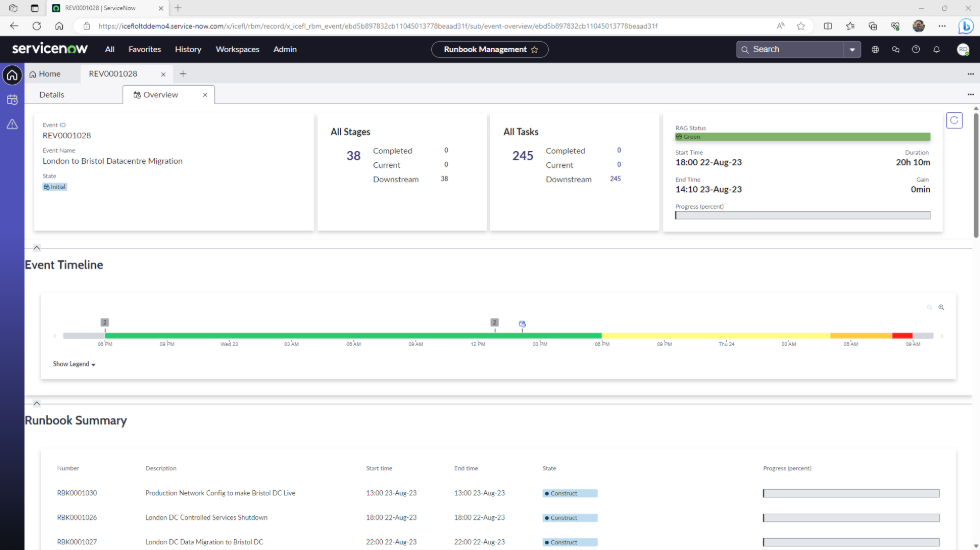
Runbook Management brings the plan, readiness, live execution and evidence together in one governed application experience - helping Programme Directors build trusted plans, prove Cutover Readiness and stay in control when the change goes live.
Build new capabilities
Across the full cutover management lifecycle

Build trusted cutover plans
- Model complex cutover plans.
- Coordinate planning across teams.
- Understand the impact of dependencies.

Prove readiness
- Assess Cutover Readiness.
- Check planning completeness.
- Build the evidence needed for confident Go / No-Go decisions.

Stay in control
- Coordinate live execution.
- Track progress in real time.
- Surface issues and understand their impact on the cutover.

Learn and improve
- Capture evidence throughout the cutover lifecycle.
- Learn from every cutover.
- Build the evidence needed to improve every future cutover.
Business-critical change has outgrown the spreadsheet runbook.
Major cutovers, migrations and transformation go-lives are too large, too complex and too important to depend on spreadsheets, documents and manually coordinated teams.
In Financial Services, the consequences of getting technology execution wrong can extend well beyond the programme itself - affecting critical services, customers, business performance and regulatory obligations.

When the consequences are material, the way you plan, prepare and run high-stakes cutovers needs to match the importance of the event.
Financial
Delay, remediation, programme overrun and lost business benefit.
Operational
Service disruption, instability and failed go-live transition.
Reputational
Loss of confidence among customers, executives, partners and the market.
Regulatory
Weak readiness evidence, unclear decisions and increased scrutiny & penalties.
It is time to move beyond spreadsheet runbooks and manage business-critical change with the control, evidence and visibility it demands.
We have used the original ICEFLO solution for almost a decade and it has transformed our cutover and DR experience. The new Runbook Management solution, delivered on the ServiceNow® platform, makes strategic sense, adds powerful functionality, eases wide-scale adoption and amplifies the benefits to our organisation.